What Balkans people have to say about a multipurpose 10$ “Turkish coffee warmer”: Do not mess with Balkan coffee making like, ever.
So Eater.com’s writers think they have found the secret to happiness with their 10$ Turkish coffee warmer. Apparently, they also think it is okay to use a džezva (the said Turkish coffee warmer) to melt chocolate and make crème anglaise. The French in me is screaming, but not as loud as my Balkan peeps.
Taking coffee culture seriously
I didn’t really enjoy drinking coffee before I moved to Belgrade and started travelling around the region to cover the news. I was always a tea person. But it becomes impossible to escape it and you end up having a cup, then another… I went once to interview a professor at the University of Zenica. He welcomed me in his office and immediately picked up his landline (!) to order two sets of Bosnian coffee. It is someone’s job to cook and bring coffee to employees of the University.
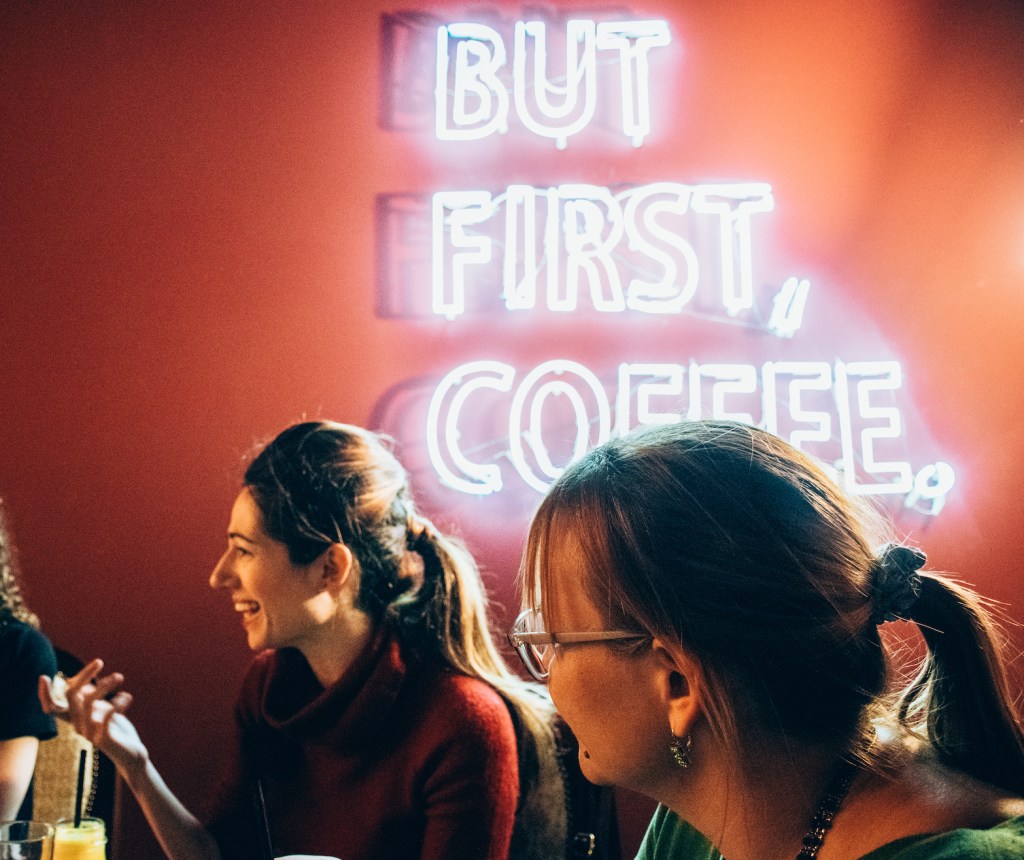
People in the Western Balkans drink all sorts of coffee all day long, at work, outside, at home, alone or with a company. All the cities are full of packed cafés where friends and family gather and put the world to rights. Smaller places all have smoky cafés where people come and go all day long. They read the papers, meet with friends, come to discuss the latest news… Some complain that people sit doing nothing instead of looking for a job or studying. It might indeed look strange to a foreigner to see people all day long in cafés and restaurants. However, coffee culture is a strong element of the social fabric of every Balkan country. It is never just about the coffee.
Historically, the culture of drinking coffee was brought in the region by the Ottomans. Kafanas started to appear from the 16th century. “Kafa” means coffee in Serbian, so a “kafana” is simply a place to drink coffee. They became popular public places where people (men only, at first) would meet, discuss, argue and make deals. Now kafanas have become traditional restaurants where one can enjoy Balkan food in a retro atmosphere, often with a small band playing traditional music. People gather to drink coffee in “kafić”, coffee bars where you can have different sorts of drinks but usually no food.
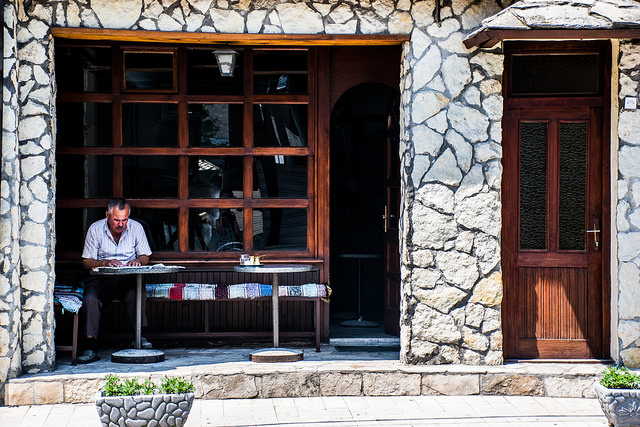
Having coffee outside with family, friends, business partners or new acquaintances is never just about coffee. It is about taking the time to discuss, argue, flirt, get to know other people, talk business and people-watch. People don’t just enter a café, gulp and espresso for a shot of energy and leave. Many things are happening during those long conversations. Which is probably why despite their love for coffee, Balkan countries are not the biggest drinkers per capita. It is not about the quantity, but about the experience.
Turkish coffee warmer what?
You can drink all sorts of coffee in big cities. Cappuccino, long or short espresso, a pitcher of cinnamon-flavoured latte… Serbian chains of cafés like Kafeterija, Coffee Dream and Koffein have nothing to envy to globalised brands like Starbucks. However, there is only one king to rule them all: Balkan-style Turkish coffee. I gave it a very specific name, I know. But bear with me, as it is important to understand what is at stakes in order not to make your Balkan friends angry at you.
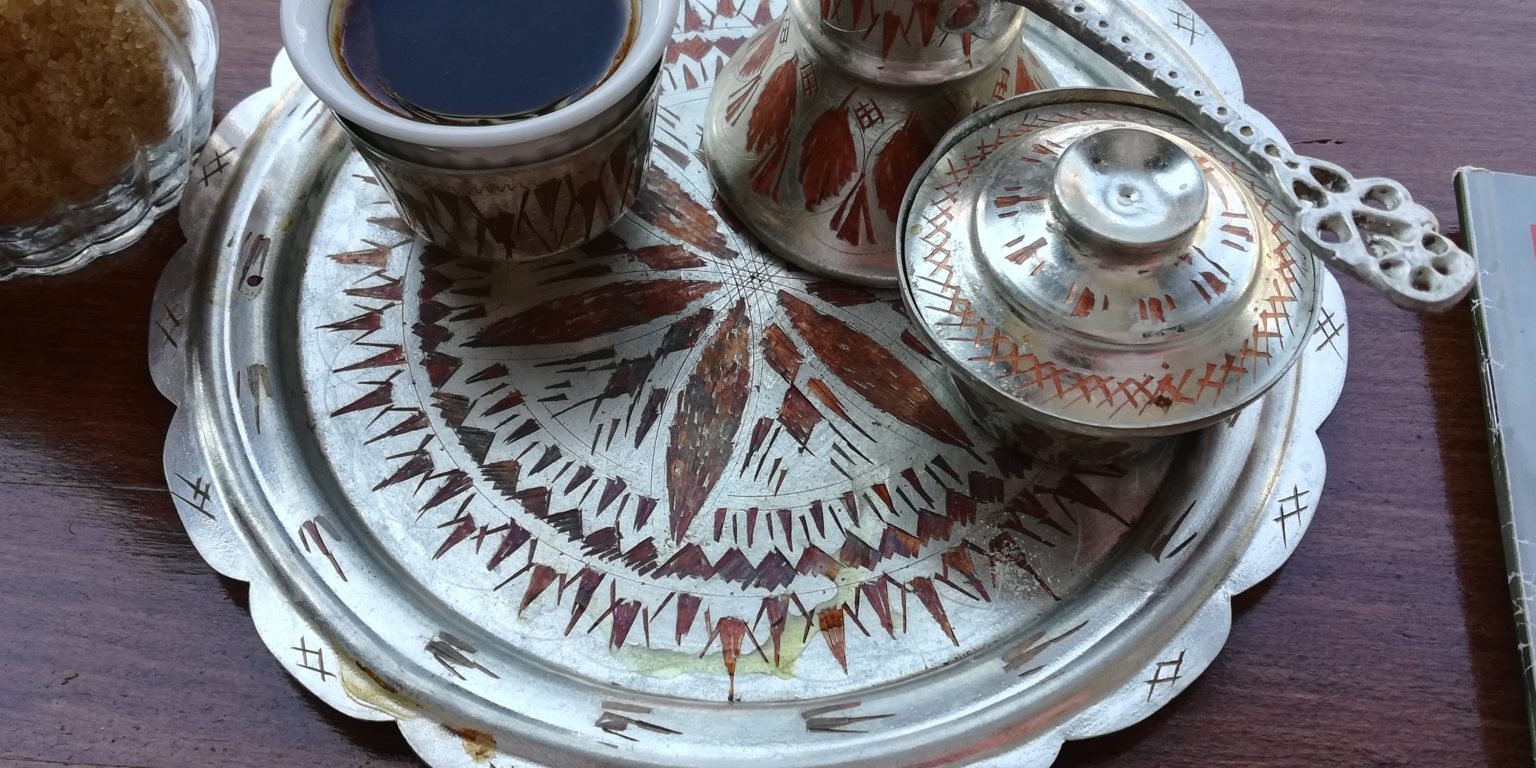
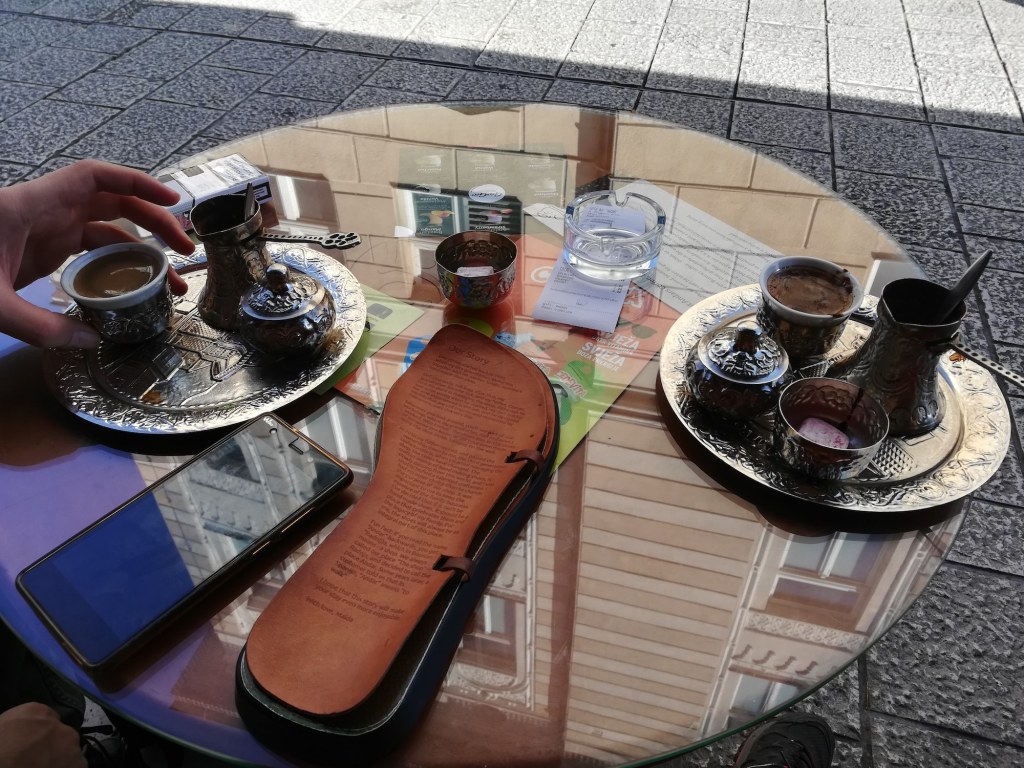
What Eater.com is trying to sell you as the invention of the century is nothing more than a (very expensive!) džezva, a special long-handled pot traditionally made of brass or copper (now often made of aluminium or stainless style). Every household in the Balkans possesses at least one, usually many. And it is used EXCLUSIVELY to prepare Balkan-style Turkish coffee.
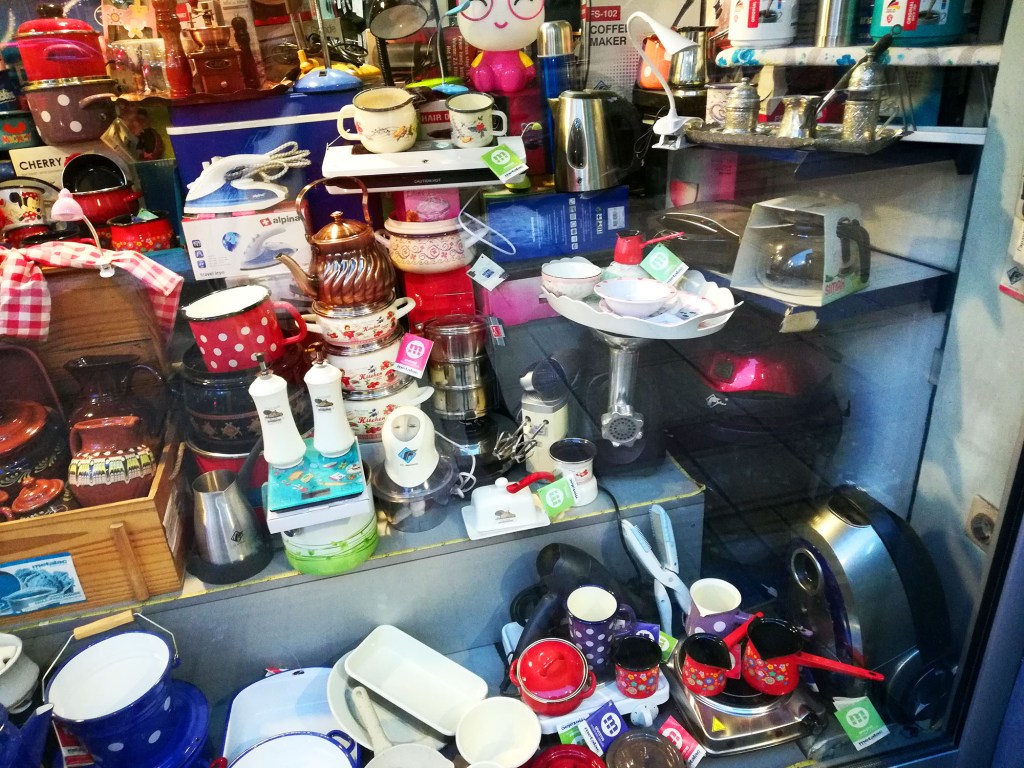
The recipe is simple: boil water, pour and mix coffee, let it rise, serve. Drink slowly. People might add a twist to it depending on regions and personal tastes (for instance when it comes to sugar), but that’s basically it. However, I call it “Balkan-style” because, although this type of coffee is inherited from the Ottoman occupation, it is prepared slightly differently than the Turkish coffee you will find in Turkey.
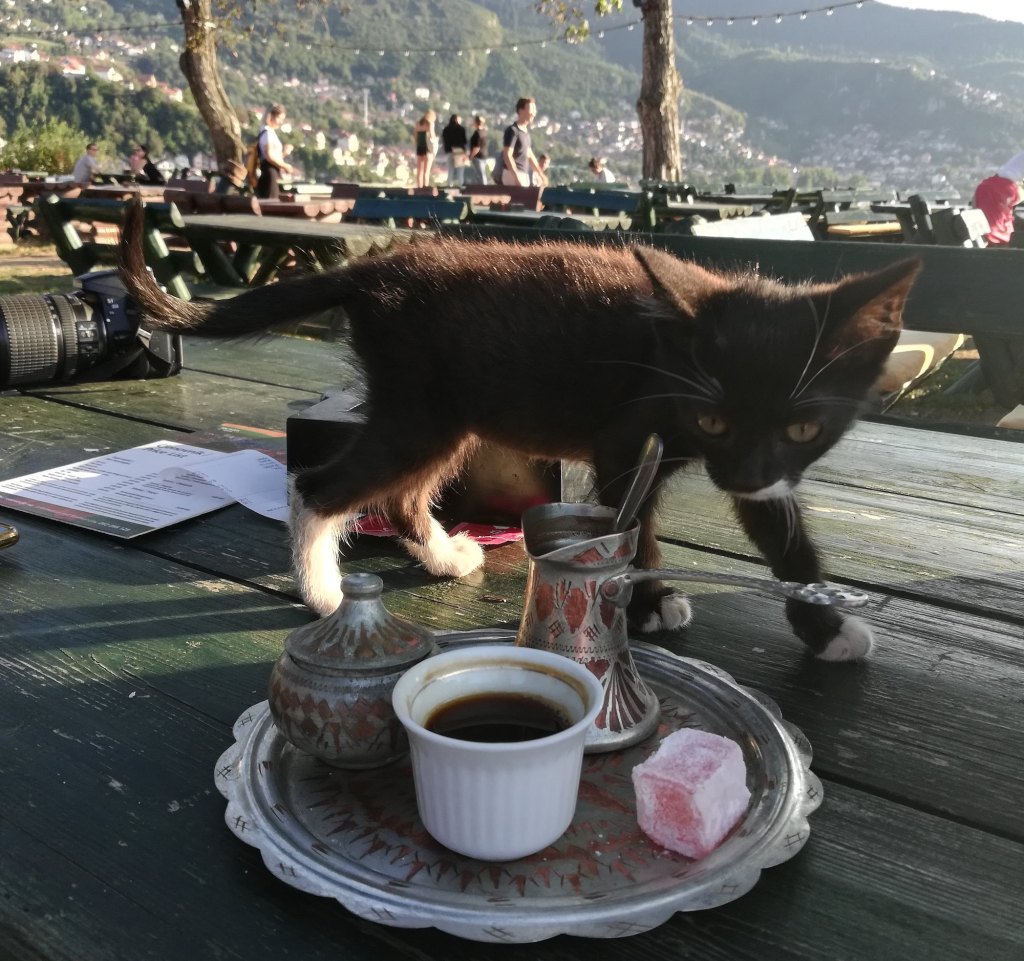
According to this BBC article, in Turkey, the coffee is added to the mix before boiling the water, which would be the major difference with the way it is done here. And what a difference it is! People in the region give it a different name and you better remember it unless you want someone to correct you. It is “homemade” (domaca) in Serbia, “Bosnian” (bosanska) in Bosnia and “Greek” in Greece. Interestingly, I am yet to meet a Balkan person who has been to Turkey and didn’t hate the coffee there.
So you understand now that coffee is a serious topic in this region. And a sensitive one, too. Be careful from now on. Otherwise, you will make people like Bosnian journalist Aleksandar Brezar very mad.
https://platform.twitter.com/widgets.js3. Never, ever, ever use it for anything else than making coffee. Melting what? Put that orange blossom syrup away before you embarrass yourself, hun. DON’T YOU FUCKING DARE USING IT TO MAKE CREME ANGLAISE IN IT – learn how to use a sauce pan ffs. Geez. Just. Don’t.
— Aleksandar Brezar (@brezaleksandar) 8 janvier 2019


Pin it!
 Happy Wanderess
Interesting. I was taught to make ‘Turkish coffee’ here by heating water and the required quantity of sugar in a djezva and as it approached boiling point, add the coffee. Allow the liquid to swell upwards and then remove from the heat just before it comes to the boil. That was how to guarantee the ‘pene’ on the surface of the coffee. Timing was everything! Oh, and when I first came to SFRJ, you ordered coffee as gorka, srednije or slatko – you never added sugar after the coffee was prepared.
LikeLike
Sounds about right. I never put sugar in the mix, only a bit afterwards when I feel like it and I know it’s not exactly by the book. There is also a debate about how many times you should put it back on the heat and let it swell upwards. I do it three times but that’s more like a lucky charm!
LikeLike
Oh dear, that fella at the end sure was fired up! I don’t drink coffee or really even like the smell, so I have no knowledge of coffee. It’s interesting that the coffee bars were started by men getting together. I would have thought it would have been women, since women traditionally stayed home. It would have been the perfect thing to do while the children were in school. I guess I have no idea. HA! Interesting post though.
LikeLike
There are a few things some people are very serious about in the Balkans, particularly in Bosnia. I mean this story was very funny and the guy was – probably – not really pissed. But it’s good to remind people of real values 😀 As for women, I have seen old photos and pictures of them drinking coffee and smoking, but at home.
LikeLike
Different regions have very unique coffee cultures! I really love how coffee represents gathering or hospitality in some sense – it has been and has become a tradition for coffee to be a welcoming gesture when meeting guests. I mean, this doesn’t only apply to the Balkans, but through the Middle East, Europe, and other places. I love how your travels have allowed you to learn more about this particular region and the significance of coffee & how it’s made!
LikeLike
Yes, coffee is a very interesting story in most of the world. The way we prepare it and drink it says a lot about our culture!
LikeLike
Wow, it was great to know about Turkish coffee. Different regions have a different coffee culture. And being a coffee lover, I am always interested to know about them more. Enjoyed reading about the history of Balkan coffee and its recipe.
LikeLike
A life built around Coffee, how nice. I love coffee and love to try out different kinds. But never tried the Balkan one before.
LikeLike
I am addicted to coffee and I love the way it brings us together. Every place accounts different yet unique coffe culture. Lovely
LikeLike
As someone who spends a lot of time in Italy, they take their coffee very seriously! I’ve not yet been to Serbia or Turkey, so I’m very interested to try the Balkan style Turkish coffee! It looks very robust and rich, and I bet will keep me awake for the whole day!
LikeLike
Yes! I’ve been to Italy recently and I read about Italian coffee culture beforehand. It’s very different I’d say.
LikeLike
I have learnt how serious coffee culture is in Ethiopia, now I am getting to know about the Balkans too. Have heard of Turkish coffee, not a great fan, but it is great to experience the local culture like this. So many stories can be written over coffee, I guess it would be a great idea to give it a try.
LikeLike
Oh I would be so interested in knowing about coffee culture in Ethiopia!
LikeLike